evan perez_

Data engineer · Milwaukee, WI

Evan Perez

I build production data pipelines, and I ship whole systems around them.

Five-plus years on the data platform behind a production machine-learning product, and now leading the team that runs it. On my own time I build complete systems end to end, from ingestion to release.

  • 5+ yrs on one production data platform
  • ~300 production releases
  • 3 engineers led, still hands-on
  • 6 systems built on my own time
or scroll ↓

Scroll to read it ↓

Experience · the source

The day job: a data platform in production

  1. migration
  2. retrain chain
  3. cold start
  4. extraction
  5. AI tooling

A production machine-learning product in a regulated industry. The company stays unnamed here; details on request.

  1. Jun 2026 – present

    Senior Engineering Manager, Data Platform

    Leading three engineers and the platform they run, and still shipping code myself.

  2. Jun 2021 – Jun 2026

    Data Engineer → Data Engineer III

    Five years building the warehouse, pipelines and ML data flows behind the product.

  1. Highlight 01 / 05

    Warehouse migration

    Migrated the warehouse from Athena to Snowflake, with day-by-day parity checks before cutover.

  2. Highlight 02 / 05

    Retrain and rescore chain

    Automated the per-client retrain and rescore chain, gated on score-parity checks.

  3. Highlight 03 / 05

    Cold-start ensemble

    Built a five-model ensemble for the cold-start case.

  4. Highlight 04 / 05

    Document extraction

    Built a document-extraction pipeline on AWS ECS.

  5. Highlight 05 / 05

    Claude Code adoption

    Led the team's adoption of Claude Code, with a compliance-gated path to the warehouse.

5 / 5 · the short version

on one production data platform
5+ yrs
production releases
~300
engineers led, still hands-on
3
  • Snowflake
  • dbt
  • Airflow
  • Python
  • SQL
  • AWS ECS
  • Textract
  • Bedrock

Before data. Teaching, regulatory affairs and coaching, then self-taught into SQL and Python. The habit that carried over: find what a system actually needs, then build that.

01 / 06 · pipeline · orchestration

Podcast production pipeline

  1. ingest
  2. transcribe
  3. analyze
  4. render
  5. publish
  6. reconcile

One command turns a raw episode into published content on five platforms, then checks that everything it planned actually went out.

The hard part A long pipeline that depends on many outside services will fail halfway through, for reasons it does not control. The job is making a partial run safe to resume and impossible to forget.

  1. Stage 01 / 06

    ingest

    One command picks up the raw episode and starts a checkpointed run.

  2. Stage 02 / 06

    transcribe

    WhisperX transcribes with word-level timestamps, so every later cut can land on a word.

  3. Stage 03 / 06

    analyze

    An LLM pass picks chapters, clips and captions, and runs a compliance check.

  4. Stage 04 / 06

    render

    Censoring, loudness normalization, sentence-snapped vertical clips with burned-in captions, thumbnails, MP3 and RSS.

  5. Stage 05 / 06

    publish

    After a human review gate, uploads go to YouTube, Instagram, TikTok, Bluesky and Spotify.

  6. Stage 06 / 06

    reconcile

    Planned versus posted is compared after every run. Any gap raises a Discord alert.

Run complete · 6 / 6 stages
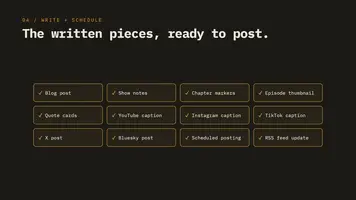
Walkthrough animation. The show itself stays anonymous, so no real clips appear here.
tests
4,000+
commits
933
platforms published to
5
  • Python
  • WhisperX
  • FFmpeg
  • LLM APIs
  • GitHub Actions
  • Discord alerts
What I built
  • Checkpointed stages: a rerun picks up where the last one died, never redoes a finished upload.
  • Planned-vs-posted reconciliation after every run, with alerts on any gap.
  • Whisper transcription with word timestamps, so clips snap to sentence boundaries.
  • LLM analysis for chapters, clip picks, captions and a compliance check, behind a human review gate.


02 / 06 · generative pipeline · quality gates

Every Verse Painted

  1. canon
  2. still
  3. face lock
  4. vision QA
  5. animate
  6. lip-sync

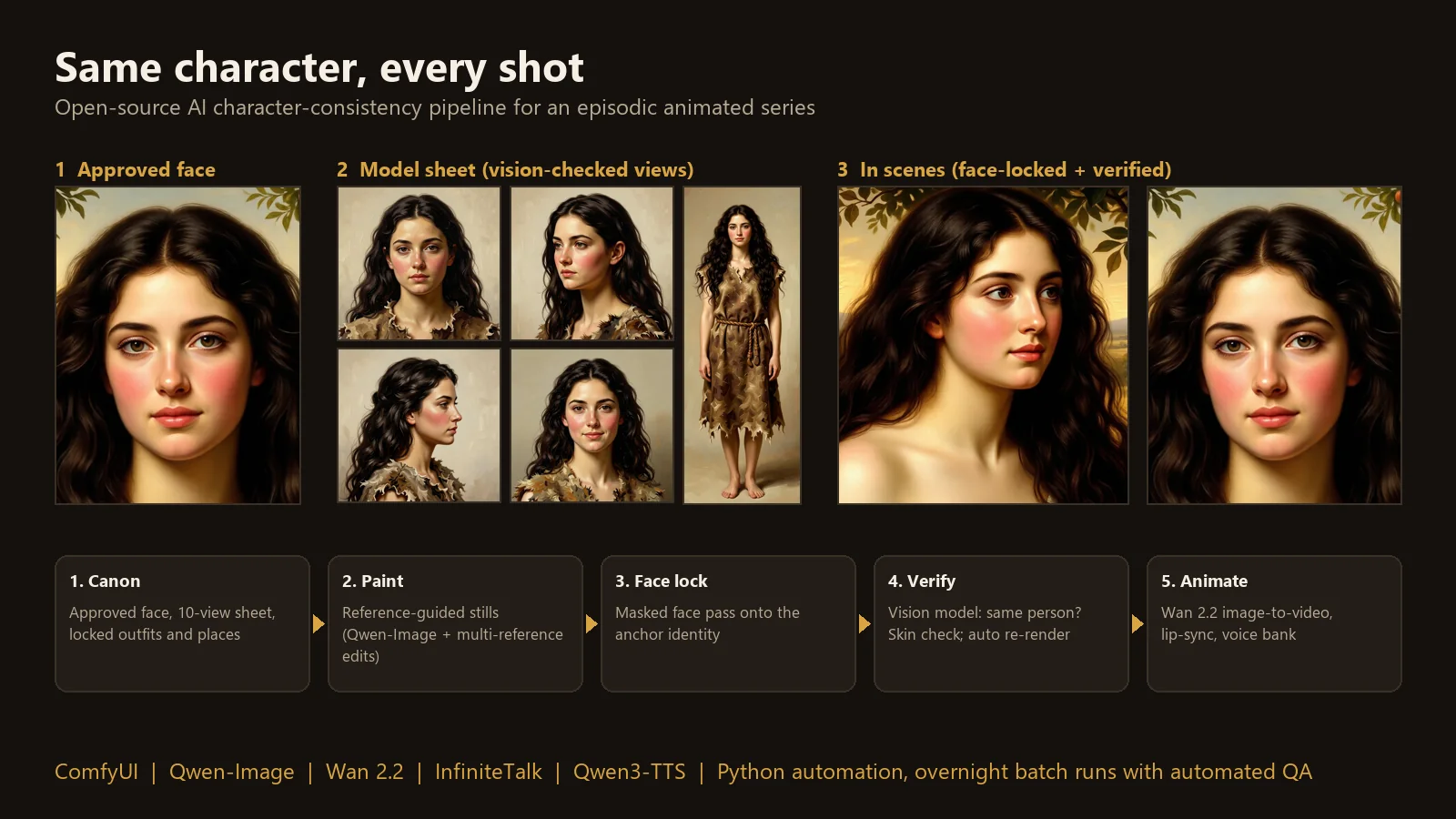
A word-for-word animated Bible in a painterly style, produced by a pipeline that keeps every character consistent from shot to shot.

The hard part Generative models drift. The same character comes out with a different face, outfit or skin tone from shot to shot, and at this volume nobody can eyeball every frame.

  1. Stage 01 / 06

    canon

    Each character gets a face anchor, a 10-view model sheet and locked outfits. A lint stops scripts redescribing them.

  2. Stage 02 / 06

    still

    Reference-guided stills come from Qwen-Image with multi-reference edits.

  3. Stage 03 / 06

    face lock

    A masked pass locks each face back onto the approved anchor identity.

  4. Stage 04 / 06

    vision QA

    A vision model asks "same person?" and a CIELAB check compares skin tone. Failures re-render or go to a person.

  5. Stage 05 / 06

    animate

    Wan 2.2 turns stills into motion. Motion and artifact checks trigger automatic re-renders.

  6. Stage 06 / 06

    lip-sync

    InfiniteTalk lip-sync, over voices from a designed Qwen3-TTS voice bank.

Run complete · 6 / 6 stages

Stills as published on everyversepainted.com, and the character consistency board.
commits
286
tests
~250
chapters in production
7
  • Python
  • ComfyUI
  • Qwen-Image
  • Wan 2.2
  • InfiniteTalk
  • Qwen3-TTS
  • FFmpeg
What I built
  • A character canon: face anchors, 10-view model sheets, locked outfits and places, and a lint that stops scripts redescribing them.
  • Automated checks on every still: a vision model asks "same person as the anchor?" and a CIELAB skin-tone check backs it up.
  • Motion and artifact QA that re-renders failures automatically, plus a provenance log for every shot.
  • Overnight batch runs with retries and GPU-yield guards; character LoRAs trained on rented GPUs.

03 / 06 · ml · feature engineering

Fight outcome forecasting

  1. scrape
  2. features
  3. ensemble
  4. calibrate
  5. walk-forward
  6. score

A calibrated ensemble that forecasts UFC fight outcomes from scraped fight data, evaluated walk-forward so it never sees the future.

The hard part Sports data leaks the future in subtle ways: a stat updated after the fight, odds recorded at the wrong time. A model can look brilliant on data it should never have seen.

  1. Stage 01 / 06

    scrape

    Scrapers collect fight stats and odds, with a record of when each price was captured.

  2. Stage 02 / 06

    features

    170+ features are built from the scraped history.

  3. Stage 03 / 06

    ensemble

    XGBoost, LightGBM and CatBoost vote as one ensemble.

  4. Stage 04 / 06

    calibrate

    Venn-Abers, isotonic and Platt calibration turn scores into honest probabilities.

  5. Stage 05 / 06

    walk-forward

    The model is replayed through time, tested only on fights it had not seen.

  6. Stage 06 / 06

    score

    A paper-trade scorer grades the forecasts. Brier score: 0.2117 down to 0.2018.

Run complete · 6 / 6 stages

Measured result. A coin flip (always saying 50%) scores 0.25 by definition.
Brier score, down from 0.2117
0.2018
tests
~1,300
commits
885
  • Python
  • XGBoost
  • LightGBM
  • CatBoost
  • FastAPI
  • Railway
What I built
  • 170+ features from scraped fight data.
  • An odds-provenance backfill that records when each price was captured. That one lineage fix moved the Brier score from 0.2117 to 0.2018.
  • XGBoost, LightGBM and CatBoost ensemble with calibration (Venn-Abers, isotonic, Platt).
  • Walk-forward simulation instead of a random train/test split.
  • A read-only exchange client (RSA-PSS request signing) and a paper-trade scorer. No live trading.

04 / 06 · backtesting · validation

Swing trading research engine

  1. market data
  2. signals
  3. backtest
  4. robustness gate
  5. paper trade
  6. dashboard

A backtesting engine with walk-forward robustness gates, a paper trader and a dashboard. Built to find out honestly whether a strategy works.

The hard part Backtests flatter you. Overfit parameters, look-ahead bias and survivorship turn noise into a beautiful equity curve. The engineering is in the gates that refuse to believe it.

  1. Stage 01 / 06

    market data

    Price history feeds a single backtesting engine.

  2. Stage 02 / 06

    signals

    13 strategies turn prices into signals on that one engine.

  3. Stage 03 / 06

    backtest

    Each strategy is replayed over history.

  4. Stage 04 / 06

    robustness gate

    Walk-forward robustness gates throw out results that only worked on the data they were tuned on.

  5. Stage 05 / 06

    paper trade

    Survivors run as paper trades: a log of what the system would have done, with no money involved.

  6. Stage 06 / 06

    dashboard

    A Streamlit dashboard shows every run, including the honest result: +2.5% against SPY's +8.4%.

Run complete · 6 / 6 stages

The engine's own verdict: it did not beat buying the index, and the gates are how I know.
strategies
13
tests
~1,340
commits
517
  • Python
  • pandas
  • scikit-learn
  • Streamlit
  • Alpaca API
What I built
  • 13 strategies on one engine, each forced through walk-forward robustness gates.
  • A paper trader that logs what the system would have done before any money is involved.
  • A Streamlit dashboard over every run.
  • The honest result: +2.5% against SPY's +8.4% over the same window. The gates are how I know.

05 / 06 · full-stack product · ci/cd

Dopamine Detox

  1. research scan
  2. screen
  3. PR
  4. test gates
  5. release
  6. monitor

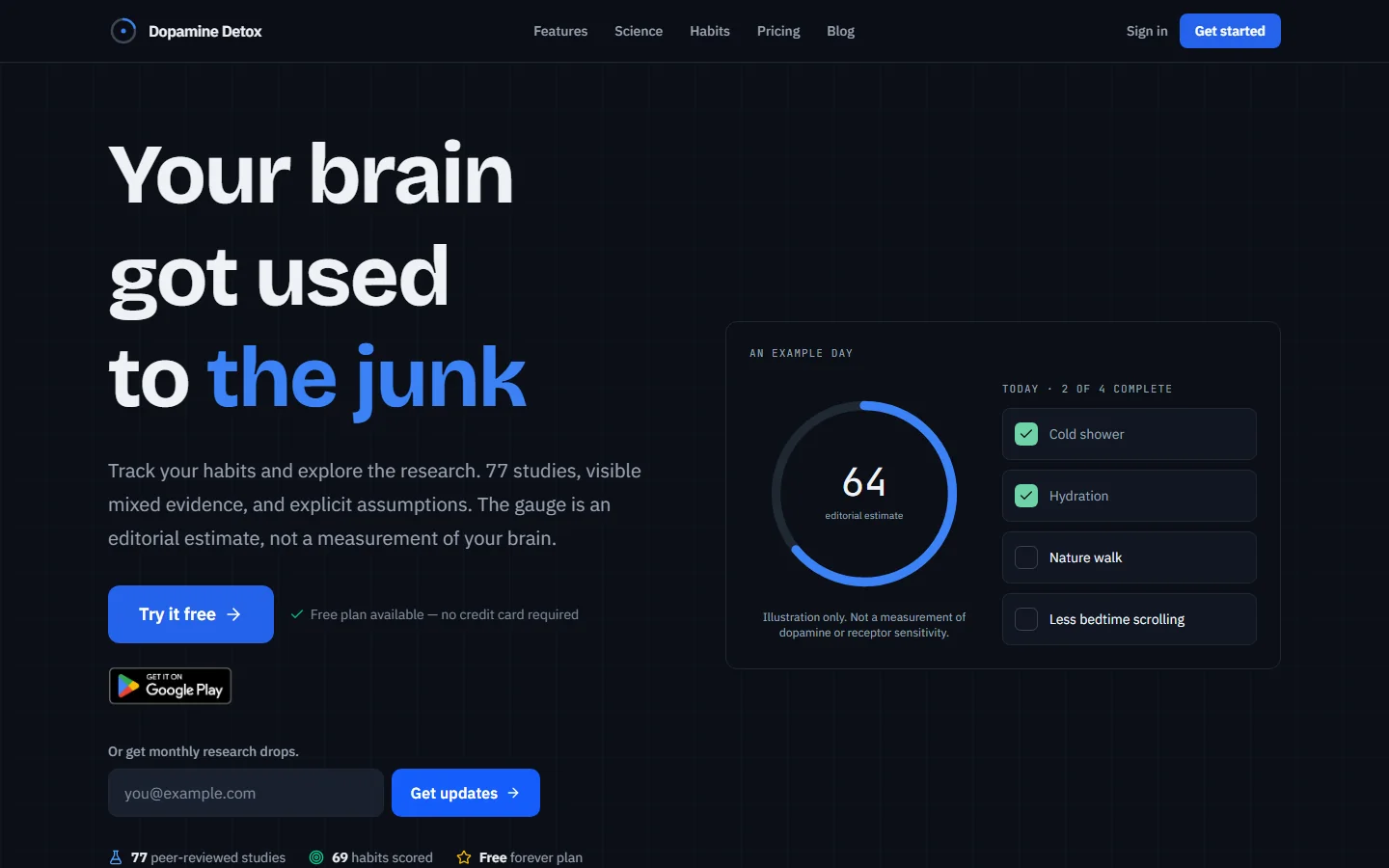
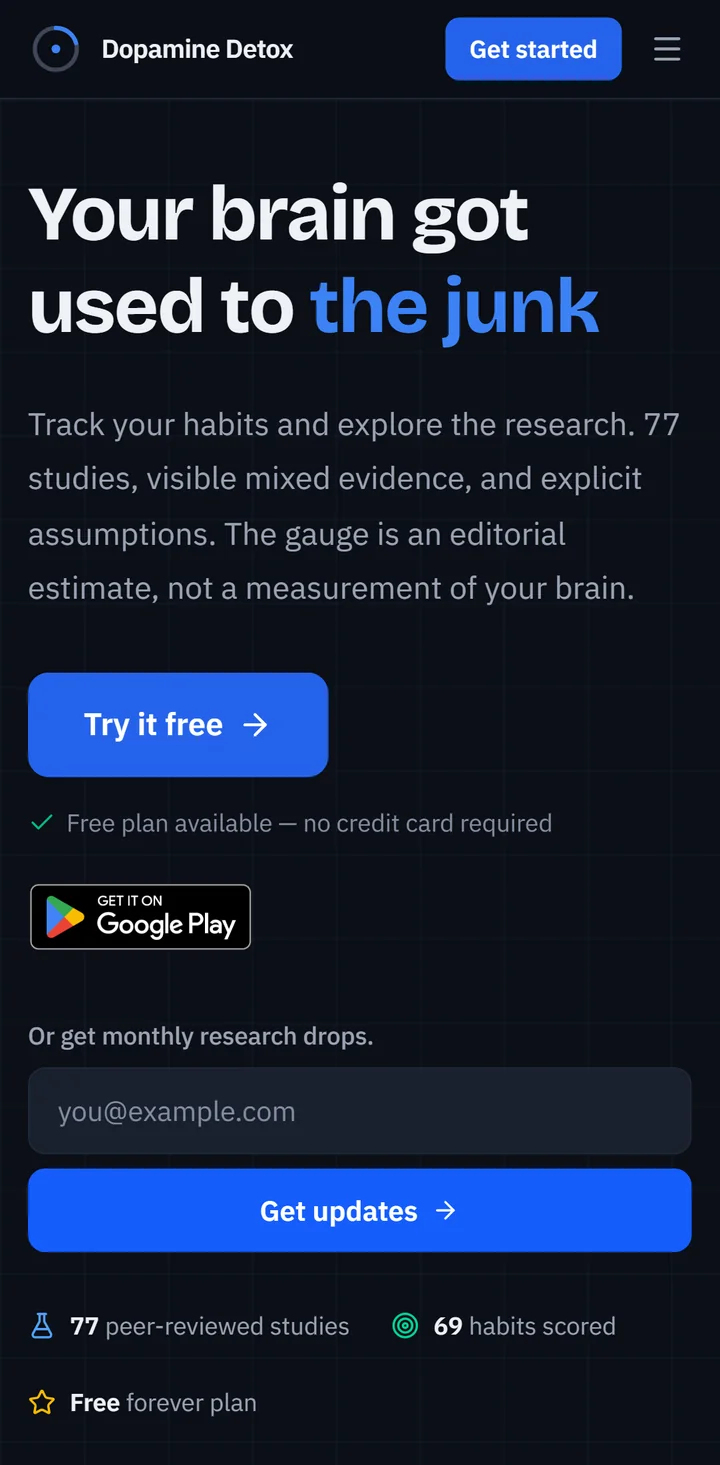
A live web and Android habit app: 69 habits scored from peer-reviewed studies, streaks, analytics and subscriptions.

The hard part One person running a subscription product on two platforms can't test by hand. Every change has to prove itself before it reaches a user, and the research behind the scores has to stay current.

  1. Stage 01 / 06

    research scan

    Every month a scan searches PubMed and OpenAlex for new studies.

  2. Stage 02 / 06

    screen

    Claude screens the papers the scan finds.

  3. Stage 03 / 06

    PR

    Changes arrive as a pull request, and a human approves or rejects it.

  4. Stage 04 / 06

    test gates

    Unit, end-to-end and visual regression tests, an Android device matrix and an AI code review all have to pass.

  5. Stage 05 / 06

    release

    Web ships with Stripe billing. Android goes through emulator smoke tests to Google Play, with RevenueCat.

  6. Stage 06 / 06

    monitor

    Sentry, nightly jobs and backups watch it once it is live.

Run complete · 6 / 6 stages

Captures of the live site at dopaminedetox.app, November 2026.
tests
~3,580
CI workflows
16
commits
1,358
  • Next.js
  • React
  • Node / Express
  • PostgreSQL
  • Capacitor
  • Stripe
  • Playwright
What I built
  • A monthly research scan: PubMed and OpenAlex, screened by Claude, opened as a pull request for human approval.
  • Required CI gates: unit, end-to-end, visual regression at three screen sizes, an Android device matrix and an AI code review.
  • Stripe on the web and RevenueCat on mobile, with nightly jobs and backups.

06 / 06 · mobile · release engineering

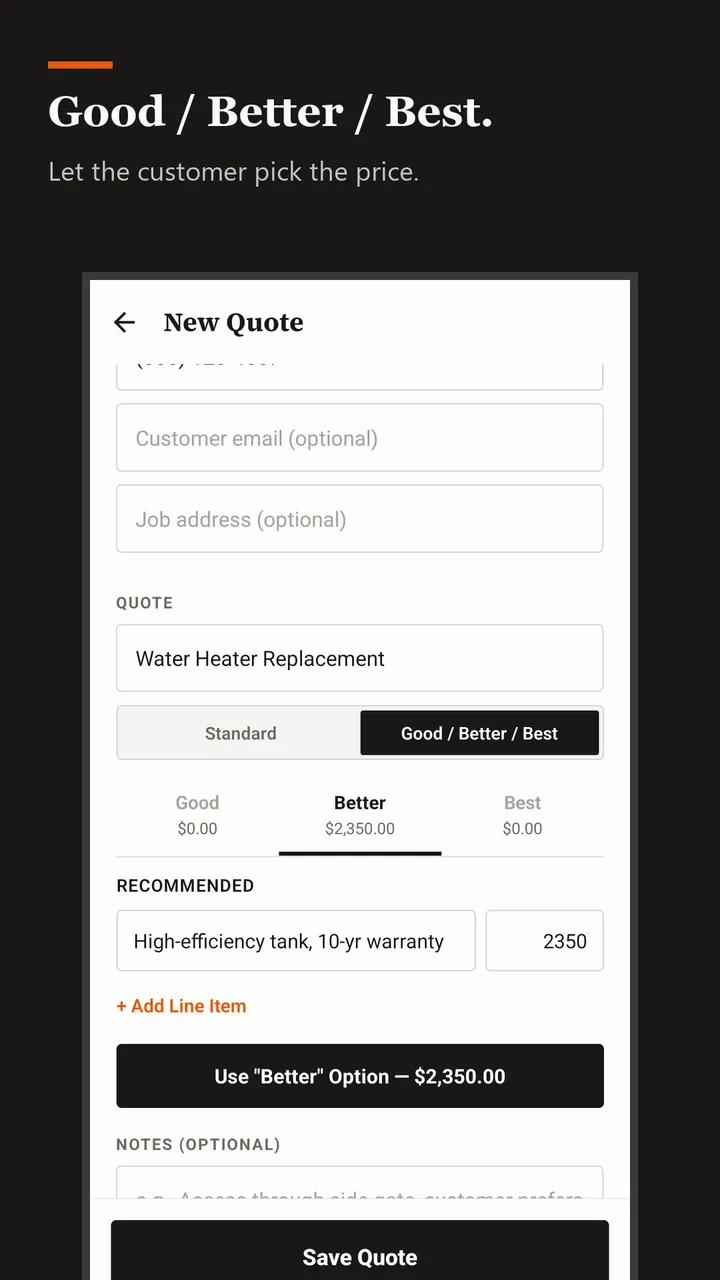
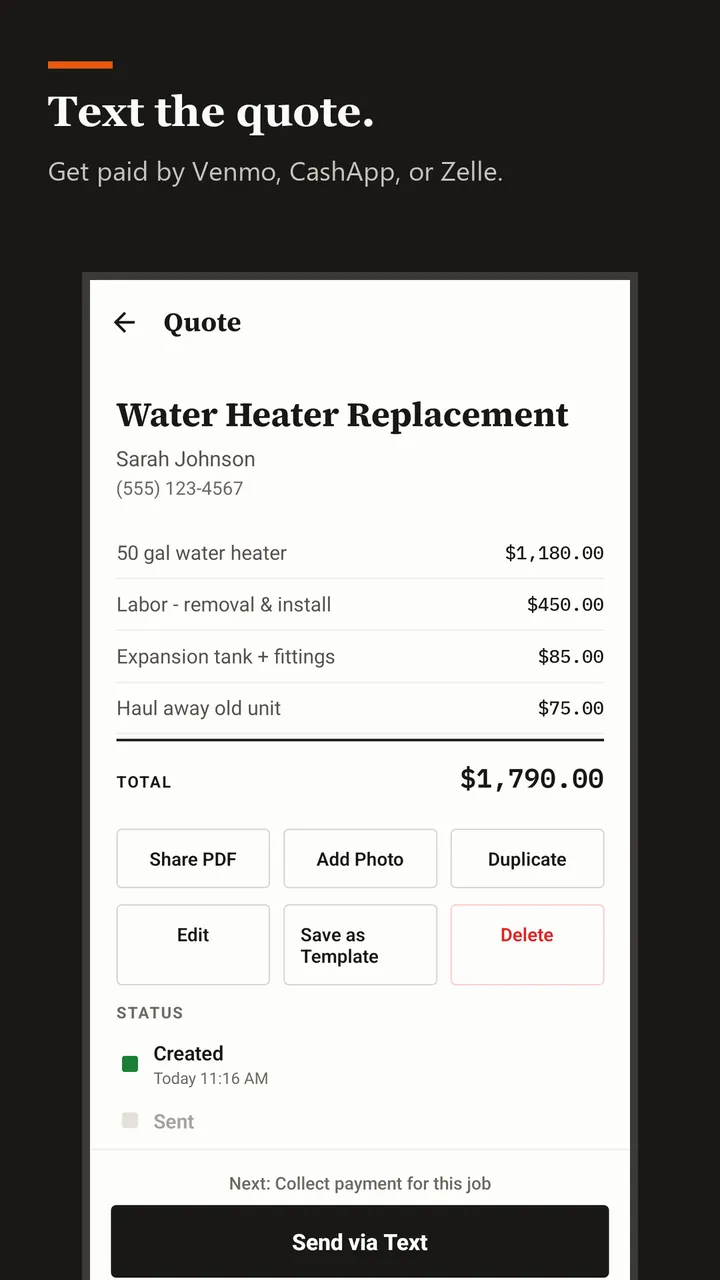
SiteQuote

  1. merge
  2. Jest
  3. build AAB
  4. Maestro E2E
  5. upgrade test
  6. Play rollout

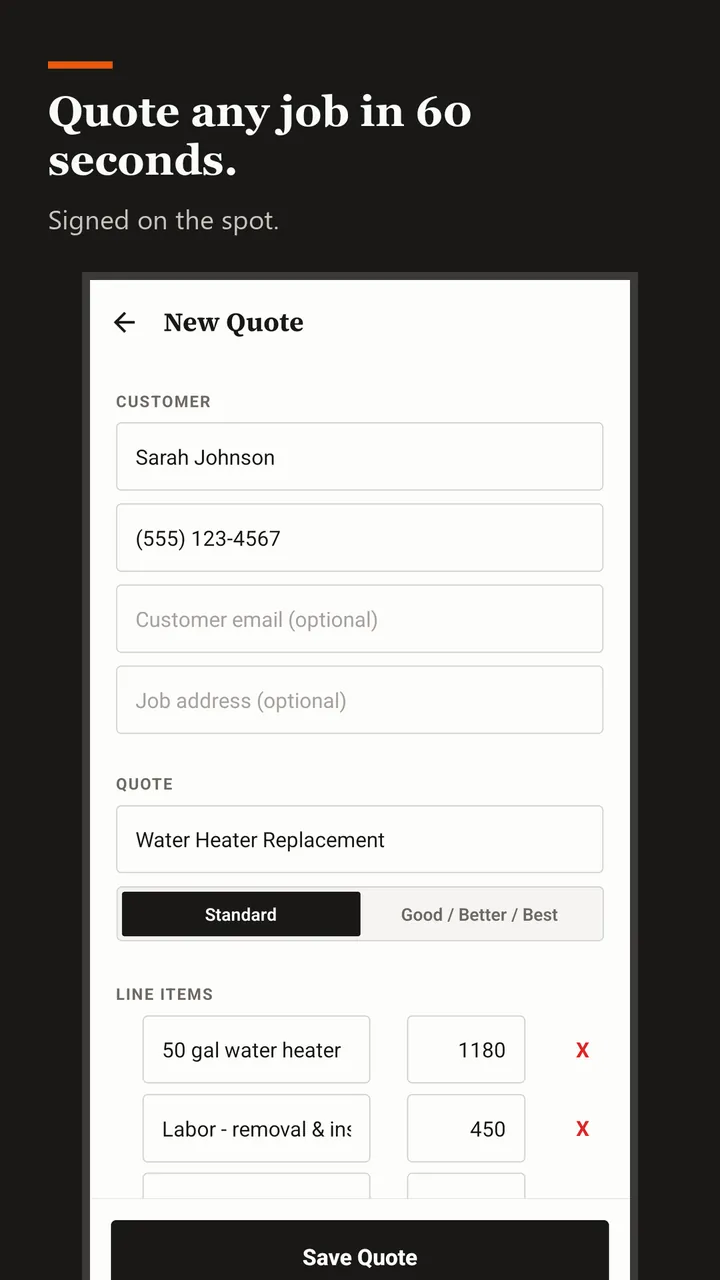
An offline-first quoting app for contractors on Google Play, shipped by a release pipeline that tests itself on an emulator before every rollout.

The hard part A broken mobile release can't be rolled back from the user's phone. The release itself has to be the test: build it, install it, upgrade over the last version, then ship.

  1. Stage 01 / 06

    merge

    A version-bump merge is the only trigger. Everything after it is automatic.

  2. Stage 02 / 06

    Jest

    The Jest suite runs first.

  3. Stage 03 / 06

    build AAB

    The release Android App Bundle is built.

  4. Stage 04 / 06

    Maestro E2E

    A Maestro release suite drives the real app on a KVM emulator.

  5. Stage 05 / 06

    upgrade test

    The new build is installed over the previous version to prove the upgrade works.

  6. Stage 06 / 06

    Play rollout

    The release is tagged and rolled out on Google Play, with a release watch afterwards.

Run complete · 6 / 6 stages

The product video and screenshots from the Google Play listing. Names and numbers in them are sample data.
tests
~1,960
CI workflows
15
commits
317
  • Expo
  • React Native
  • expo-sqlite
  • Jest
  • Maestro
  • GitHub Actions
What I built
  • Version-bump merge triggers the whole chain: Jest, AAB build, a Maestro release suite on a KVM emulator, an upgrade test, a tag and the Play rollout.
  • Local SQLite, so quotes work with no signal on a job site.
  • Release watch and Play listing, price and rollout automation.

How I work · the gate

Trust the checks, not the run

  1. AI review
  2. watchdog
  3. reconcile
  4. bitemporal

Every system above runs behind gates like the one on screen. Rows that fail validation don't vanish: they land in quarantine, where someone can look at them and replay them.

Four checks The same ones sit under every project on this page.

  1. Check 01 / 04

    AI review is a merge gate

    In my main repos a pull request has to pass CI and an AI code review before it can merge.

  2. Check 02 / 04

    Dead-man's switch

    An external watchdog alerts when a scheduled job doesn't run, the failure that logs and retries never catch.

  3. Check 03 / 04

    Reconcile, don't trust

    Pipelines compare what they planned against what actually happened, then alert on the gap. Parity checks before a cutover.

  4. Check 04 / 04

    Data that changes its past

    Reference data gets revised retroactively. Bitemporal modeling keeps both what was true and what we knew when.

All checks passed · 4 / 4

Release · run complete

run summary · side projects

systems built end to end
6
automated tests
12,000+
commits
4,200+

Counted from the repos in November 2026. Page built 2026-11-17.

Say hello

Happy to talk data platforms, pipelines that refuse to lie, or any of the systems on this page.